
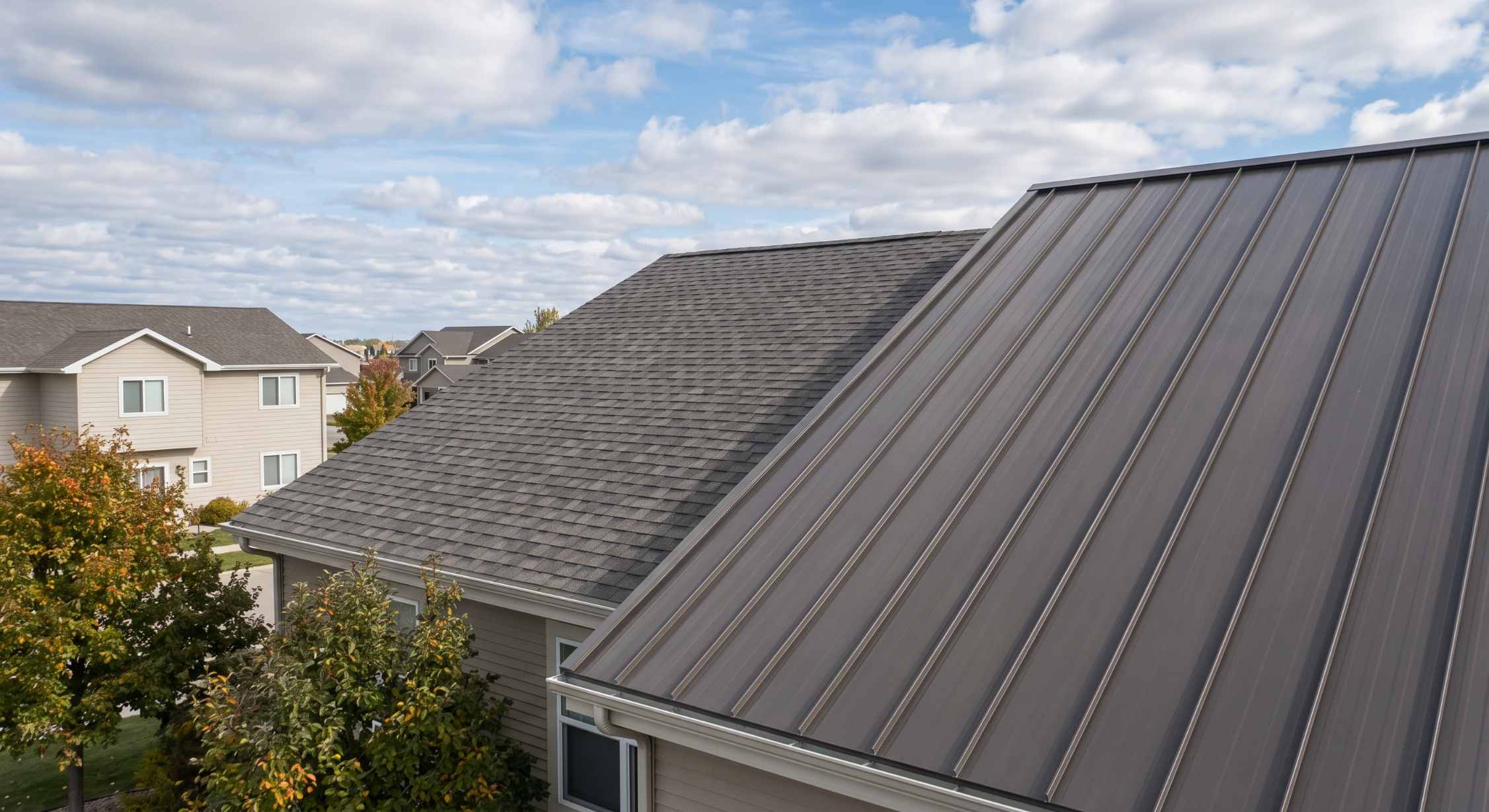
Choosing a new roof for your home in the Bismarck-Mandan area is a major capital investment that directly impacts your property’s protection, energy efficiency, and long-term value. Our regional climate presents some of the harshest conditions in the nation—ranging from summer hailstorms and high wind gusts to sub-zero winter temperatures, heavy snow accumulation, and destructive freeze-thaw cycles.
When evaluating a roof replacement, homeowners often weigh the lower upfront cost of traditional asphalt against the permanent, high-performance protection of steel. Working with a knowledgeable metal roofing contractor in Bismarck, ND or an experienced installer of asphalt shingle roofing in Bismarck, ND helps you evaluate both materials objectively to select the system that best matches your budget and long-term goals.
Lifespan and Long-Term Value
The most fundamental difference between asphalt shingles and metal roofing lies in their expected service life under North Dakota weather conditions.
Architectural Asphalt Shingles: Modern dimensional shingles offer an attractive initial price point and familiar aesthetic. However, intense UV radiation during summer and severe winter thermal shocks degrade petroleum-based asphalt over time. Granule loss, curling, and seal-strip failure mean an asphalt roof in Bismarck typically requires replacement every 15 to 20 years.
Standing Seam & Panel Steel Roofing: Engineered steel roofing is designed as a lifetime building solution. High-gauge steel with PVDF (Kynar 500) protective finishes easily withstands 50 or more years of environmental exposure without rotting, cracking, or losing structural integrity, effectively ending the repetitive cost of roof replacement.
Ice Dam Resistance and Winter Performance
Winter weather poses severe threats to residential roofs. Ice dams form when attic heat melts snow on the upper roof deck; the meltwater runs down to the cold eave, freezes into an ice ridge, and traps subsequent water runoff behind it.
How Asphalt Responds to Ice Dams
Granular asphalt shingles rely on overlapping seams and gravity to shed water. When an ice dam forms, backed-up water sits under standing pressure, easily finding its way under shingle edges and capillary seams. This leads to interior ceiling leaks, wet insulation, and hidden structural rot along the fascia board. Preventing this requires extensive attic ventilation and insulation balancing.
How Metal Handles Winter Snow
Steel panels feature smooth, non-porous surfaces that shed snow and ice rapidly before massive accumulations can freeze into dams at the eaves. On standing seam systems, the interlocking vertical ribs elevate panel joints above standing water, providing an impenetrable barrier against wind-driven snow and freeze-thaw cycles.
Severe Storm Durability
North Dakota summers bring intense thunderheads capable of generating damaging wind gusts and large hail.
| Performance Metric | Architectural Asphalt Shingles | Premium Steel Roofing |
| Hail Impact Resistance | Variable (Prone to granule bruising, cracking, and loss of seal) | Superior / Class 4 Rated (Resists punctures and cracking) |
| Wind Resistance | Rated up to 110–130 mph (Risk of shingle lift/tear-off) | Rated for extreme wind loads (Interlocking mechanical seams) |
| Fire Resistance | Class A (Combustible asphalt composition) | Class A Non-combustible (Maximum wildfire/ember defense) |
| Energy Efficiency | High heat absorption into attic space | High Solar Reflectance (Cuts summer cooling costs) |
Frequently Asked Questions
Is a metal roof much more expensive than asphalt shingles?
The initial investment for a steel roof is typically 2 to 3 times higher than a standard architectural shingle roof. However, when measured over a 50-year horizon, steel is often more cost-effective because it eliminates the need for 2.5 shingle replacements, lowers insurance premiums, and reduces energy costs.
Will a metal roof make my home noisy when it rains or hails?
No. When installed over solid wood sheathing, synthetic underlayment, and proper attic insulation, a steel roof absorbs acoustic vibrations. Indoor noise levels during rain or hail storms are virtually indistinguishable from traditional asphalt shingles.
Can asphalt shingles still be a good choice for my Bismarck home?
Yes. High-quality Class 4 impact-resistant architectural shingles installed with synthetic underlayment, ice and water shields, and proper attic ventilation offer reliable protection at an accessible entry price—making them an excellent option for short-to-medium-term homeowners or budget-conscious renovations.
How does a metal roof affect my homeowner’s insurance policy?
Because steel roofing carries a UL 2218 Class 4 Impact Resistance rating and a Class A Fire Rating, many North Dakota insurance providers offer premium discounts ranging from 10% to 35% annually for upgrading to metal.
Selecting the ideal roofing system requires balancing your current budget, home ownership timeline, and performance expectations. At Vander Wal Contracting, we install both high-performance asphalt shingle systems and permanent steel roofs with accuracy and intent across Bismarck, Mandan, and Lincoln.
Explore our completed projects in our home remodeling gallery, read client reviews on our testimonials page, or contact us today to schedule a complimentary roofing estimate.
By: Vander Wal Contracting Editorial Team
Last Updated: September 11, 2026
Credentials: Bismarck-Mandan’s local specialists in residential roofing replacement, storm damage restoration, and climate-resilient exterior engineering.