
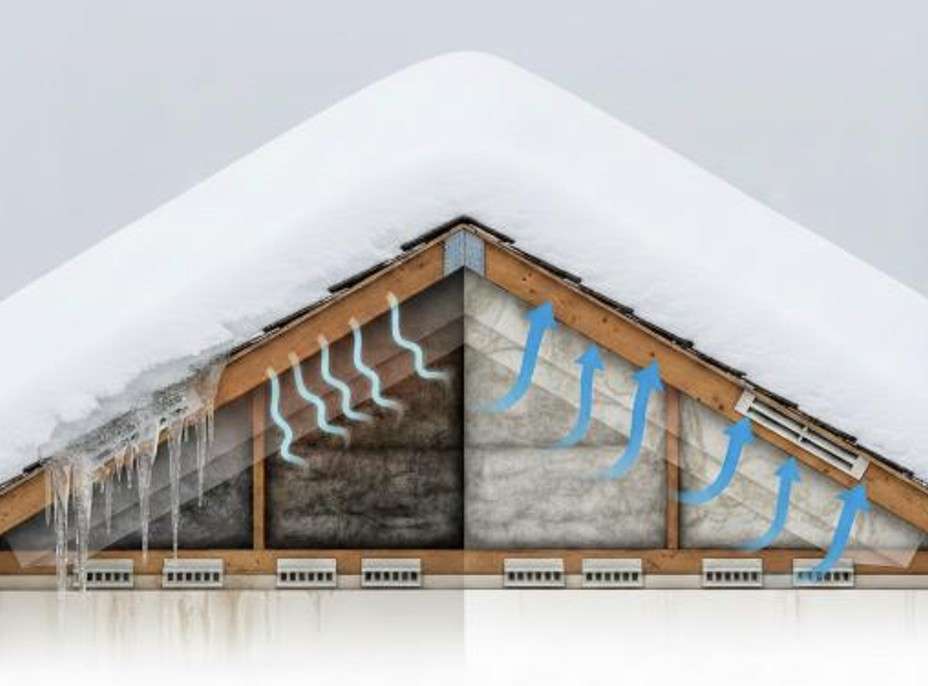
The cycle of snow, melt, and refreeze on a North Dakota roof can lead to devastating structural leaks, but the solution starts in the attic. Proper attic ventilation prevents ice dams by maintaining a “cold roof” environment. By circulating outdoor air through the attic, ventilation ensures the roof deck temperature remains consistent with the outside air. This stops the heat from escaping your living space and melting snow on the upper roof, which would otherwise refreeze at the colder eaves to create a damaging ice dam.
Effective ventilation is your first line of defense against water infiltration during our harsh Bismarck winters. To protect your home, your system must balance intake and exhaust airflow, eliminate the hot spots that cause uneven snowmelt, and reduce the risk of mold and shingle degradation. This strategy works alongside your insulation to lower seasonal energy costs while extending the life of your roofing materials.
Understanding the Ice Dam Cycle
In the Bismarck-Mandan area, ice dams are a systemic failure of the attic’s climate control rather than a simple shingle issue. An ice dam is a ridge of ice that forms at the edge of a roof and prevents melting snow from draining. The water that backs up behind this frozen wall can seep under shingles and leak into your home, damaging walls, ceilings, and insulation.
The process begins when heat leaks from your living space into the attic, warming the underside of the roof deck above $32^{\circ}F$. This melts the bottom layer of snow, causing water to flow down toward the overhanging eaves. Because the eaves are not warmed by the attic, the water refreezes instantly, building the dam. As more snow melts, the trapped water pools behind the ice, eventually finding its way into your home’s structure.
How Ventilation Creates a Thermal Barrier
While high-quality insulation keeps heat inside your home, ventilation ensures that any heat that does escape is flushed out before it can warm the roof deck. At Vander Wal Contracting, we engineer Bismarck roofing systems specifically for the North Dakota climate, where extreme temperature swings are the norm.
| Component | Role in Prevention | Long-term Benefit |
| Intake Vents | Pulls cold air into the attic via the soffits. | Prevents stagnant hot spots. |
| Exhaust Vents | Releases warm, moist air at the ridge. | Maintains consistent deck temp. |
| Attic Baffles | Keeps airflow paths clear of insulation. | Ensures system functionality. |
The Anatomy of a Balanced System
A ventilation system must be balanced to function correctly. If your roof has too much exhaust and not enough intake, the system may actually pull conditioned air from your living space into the attic, worsening the problem.
A professional installation includes Soffit Vents located under the eaves to allow fresh air to enter at the lowest point, and Ridge Vents installed along the peak to provide a continuous exit path for rising heat. We also utilize Attic Baffles—specialized channels that ensure your insulation doesn’t block the air coming in from the soffits, which is a common failure point in local DIY projects.
Regional Challenges: The North Dakota Climate
Our local climate presents unique hurdles for homeowners. Heavy snowfall acts as a thick insulator, trapping even small amounts of attic heat and accelerating the melt at the roof surface. Furthermore, in many older homes in Lincoln and Mandan, structural members can cause “thermal bridging,” transferring heat directly to the roof deck. This requires a strategic roofing inspection to identify where ventilation must be optimized to counteract these specific hot spots.
Frequently Asked Questions
Does more insulation mean I don’t need ventilation?
No. More insulation actually makes ventilation more critical. Ventilation handles the moisture and residual heat that insulation cannot block. Without airflow, trapped moisture leads to mold and wood rot.
Can I just clear my gutters to stop ice dams?
While clean gutters help drainage, they do not stop ice dams. Ice dams form on the roof deck itself, often above the gutter line. The solution must address the roof temperature, not just the gutters.
How do I know if my attic is poorly ventilated?
Look for “hot spots” where snow melts faster than the rest of the roof, or large icicles forming only in specific areas. Inside, check for frost on the underside of the roof deck during extreme cold.
Will ventilation make my heating bill go up?
It can actually help lower it. By removing moisture, ventilation keeps your insulation dry. Wet insulation loses its effectiveness, forcing your heating system to work harder to maintain temperatures.
What is a “Cold Roof”?
A cold roof is a design where the temperature of the roof surface remains nearly the same as the outside air. This is achieved through the combination of high R-value insulation and robust, balanced ventilation.
Can I install roof vents myself?
Roofing work in North Dakota is dangerous and highly technical. Improperly installed vents can lead to leaks or imbalanced airflow. It is best to have an expert evaluate the entire system to ensure it meets local building codes.
Preventing ice dams requires a proactive approach to your home’s exterior envelope. At Vander Wal Contracting, we don’t just “fix roofs”—we engineer solutions that protect your investment from the inside out. Don’t wait for a leak to realize your ventilation is failing. Whether you need a full replacement or a specialized roof repair, our team is here to ensure your home is built with accuracy and intent.
By: Vander Wal Contracting Editorial Team
Last Updated: January 21, 2026
Credentials: Locally owned and operated in Bismarck, ND; specializing in North Dakota climate-resilient roofing and exterior solutions.