
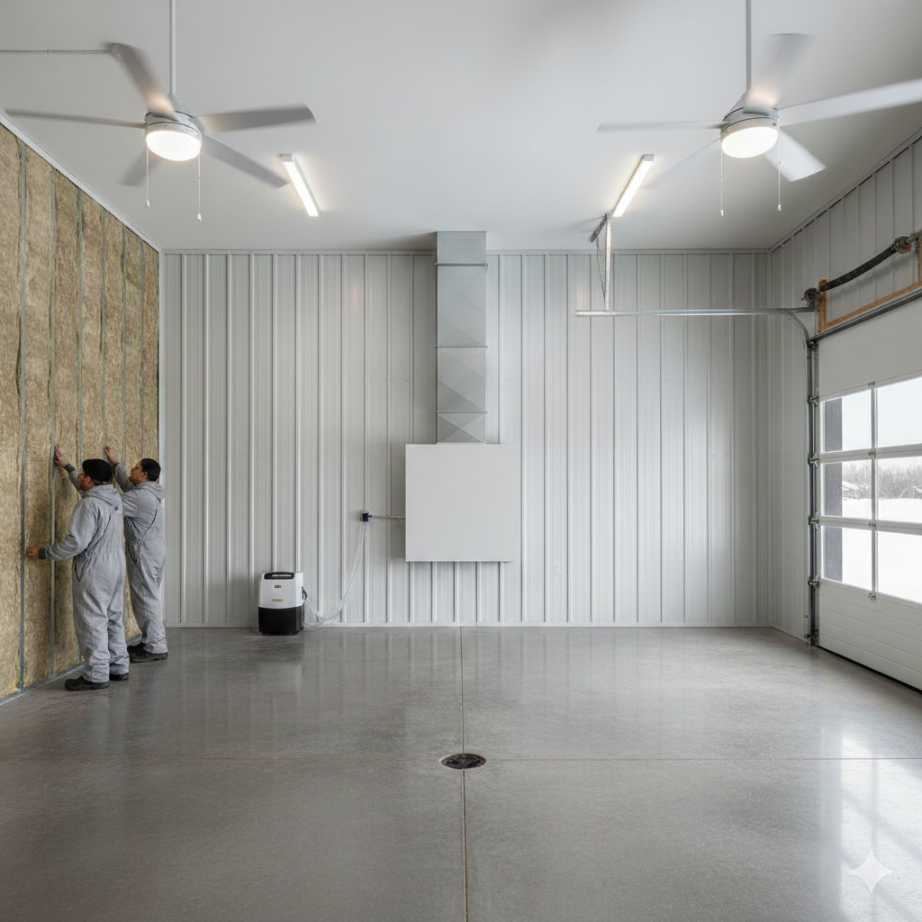
Achieving effective climate control is paramount for maximizing the utility and protection of shop condos in Bismarck, ND. Because these units serve as high-value storage and dedicated workshops, proper insulation must be integrated into the walls, roof, and concrete slab to maintain stable temperatures. This thermal envelope, when paired with an efficient heating, ventilation, and air conditioning (HVAC) system, ensures vehicles, tools, and inventory are protected from the extreme cold, heat, and damaging humidity fluctuations of the region.
Quick Summary
These dedicated specialty structures require precise temperature management for their valuable contents. Effective climate control protects sensitive equipment from the North Dakota cold. The system must start with superior insulation in the walls and roof to create an efficient thermal barrier. We integrate customized HVAC and ventilation solutions tailored to your unit’s specific intended use.
Defining the Need for Shop Condos Climate Control
In the Bismarck area, a shop condo that lacks robust climate control is simply a storage shed vulnerable to the elements. For units used to store classic cars, sensitive electronics, or as functional contractor workshops, maintaining a consistent, dry temperature is critical. The high winds and below-zero temperatures of a North Dakota winter demand a sealed, insulated envelope to prevent freeze damage and excessive energy costs. A controlled environment also ensures the space remains comfortable and productive for occupants year-round.
The Foundation of Climate Control: Insulation
The starting point for all efficient shop condos is a high-performance thermal envelope. This essential barrier must be integrated not just into the walls, but also into the roof and the concrete slab foundation. Because the underlying structure of a shop condo is often similar to the robust post-frame construction we specialize in, there are unique opportunities to utilize larger wall cavities for thicker, superior insulation than is available in standard building types. This prevents massive heat loss during the winter and significantly reduces cooling costs in the summer. We ensure the entire envelope is meticulously sealed against air leaks, which are responsible for the majority of heat loss in any structure.
Heating, Ventilation, and Air Systems
Once the shop condo is properly insulated and sealed, we focus on the mechanics of temperature regulation. For hobby shops or personal storage, simple radiant heat or forced-air systems may suffice. However, true climate control for intensive workshops requires a tailored HVAC system capable of handling both heating and cooling to mitigate temperature spikes during the summer months. Furthermore, if the unit is used for activities that generate pollutants like welding or painting, specialized ventilation and air exchange systems must be designed to maintain healthy air quality and prevent the buildup of fumes and moisture, protecting both stored assets and occupants.
Protecting Your Investment from Humidity
Beyond temperature regulation, humidity control is a vital element of climate control in specialty structures. Excess moisture in the air can lead to rust on stored vehicles or sensitive tools, and it can compromise building materials over time. Proper ventilation works in tandem with the heating system to expel this moist air. For high-value shop condos, dehumidification systems may be a necessary addition to ensure the interior environment remains stable and dry, preserving the long-term condition of sensitive or expensive inventory.
Shop Condo and Climate Control Frequently Asked Questions
Does VWC install heating systems?
Yes, we incorporate custom heating systems, including radiant floor heat and forced-air systems, to meet the specific climate control demands of your unit’s size and intended use.
Is insulation included in standard shop condo construction?
The level of insulation is customized based on your needs. For year-round climate control, we highly recommend superior insulation in the roof, walls, and slab to achieve maximum energy efficiency.
Why is the concrete slab important for temperature?
A properly insulated concrete slab prevents cold air and moisture from wicking up from the ground. This significantly aids in maintaining a stable floor temperature and substantially reduces heating costs.
Can shop condos be used as commercial office space?
Yes, these units are versatile. We can design segregated, fully finished, and independently climate-controlled office spaces or breakrooms within the larger workshop area for administrative needs.
Do I need cooling, or just heating in Bismarck?
While winter heating is mandatory in North Dakota, summer cooling is often essential for protecting sensitive equipment from excessive heat and ensuring the workspace remains comfortable and usable in the warmer months.
Can VWC help design a versatile floor plan?
Absolutely. We specialize in designing functional, multi-purpose shop condo spaces. We help you zone the area for optimal utility, storage, vehicle access, and efficiency, aligning with the principles of post-frame buildings design.
Secure Your Versatile Workspace
A shop condo provides the perfect solution for specialized commercial, enthusiast, or storage needs, but its value relies heavily on dependable climate control. When you partner with Vander Wal Contracting, you gain a durable structure built to withstand the North Dakota climate, equipped with the essential systems to protect your valuable assets year-round.
Contact us today to schedule your consultation and begin designing your climate-controlled shop unit at our dedicated Post-Frame Buildings service page.
By: Vander Wal Contracting Team Last Updated: November 17, 2025