
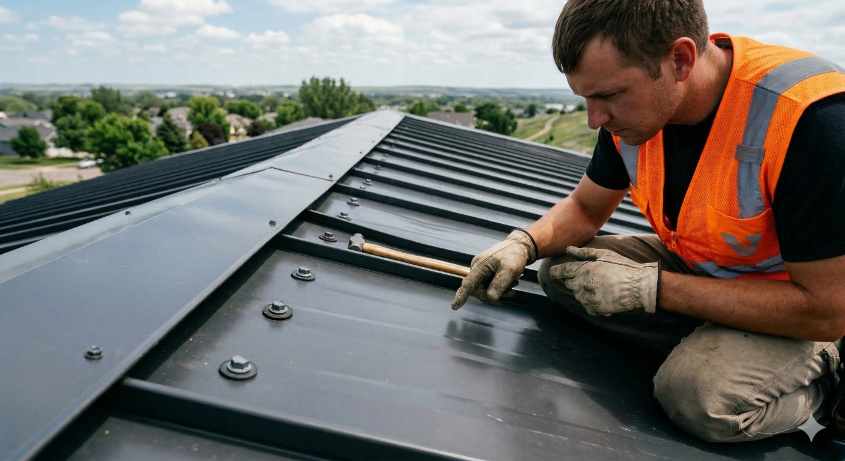
In the high-wind environment of the Bismarck-Mandan area, homeowners are often surprised to find active leaks after a storm despite their metal roof looking perfectly intact from the ground. Unlike asphalt shingles that blow off or crease, metal roofing often suffers from “subtle” wind damage—specifically the loosening of fasteners or the breaking of sealant tapes—that allows water to infiltrate while the panels appear securely attached.
Identifying these hidden failures is critical to preventing long-term structural decay and insulation damage. At Vander Wal Contracting, we take a technical approach to metal roof repairs, looking beyond the surface to find compromised seals, fastener fatigue, and structural weaknesses that standard visual inspections often miss.
The Aerodynamics of a Metal Roof Leak
Wind doesn’t just push against your home; it creates complex pressure changes as it flows over your roofline. As wind hits the side of your house and travels upward, it creates a “suction” or negative pressure zone, particularly at the eaves, ridges, and corners.
In a high-wind event, this suction can cause metal panels to “flutter” or vibrate. This vibration puts immense stress on the fasteners and the structural wood underneath. Even if the panel doesn’t fly off, the constant movement can “wallow out” the screw holes or break the neoprene washers that provide a waterproof seal. The next time it rains, wind-driven water is pushed into these microscopic gaps, bypassing your primary defense and soaking the roof deck.
Subtle Signs of Wind Damage to Watch For
Because metal roofing is exceptionally rigid, you must look for the secondary “symptoms” of wind-induced failure:
- Fastener Back-Out: Look for screw heads that appear slightly raised or uneven across a row. If a screw has backed out even a fraction of an inch, the rubber washer is no longer compressed against the metal, creating a direct entry point for water.
- Failed EPDM Washers: Wind vibration can cause the rubber washers under your fasteners to crack or “mushroom” out. If the black rubber looks brittle or is missing entirely, the fastener is no longer weather-tight.
- Sealant Tape Compression: In Standing Seam metal roofs, the internal sealant tape within the seams can be compromised if wind uplift causes the panels to flex excessively.
- Vibrated Flashing: High winds can vibrate metal roof flashing around chimneys and vents, cracking the brittle caulking or loosening the mechanical attachment points.
| Damage Type | Visual Indicator | Hidden Risk |
| Loose Fastener | Screw head raised or tilted. | Water seeping into the wood purlin/deck. |
| Panel Flutter | “Oil canning” or slight waviness. | Stress fractures and wallowed-out screw holes. |
| Ridge Cap Lift | Gaps at the peak of the roof. | Rain driven directly into the attic vent. |
| Cracked Washers | Brittle or missing rubber seals. | Rusting of the fastener and deck decay. |
Interior Warning Signs in the Attic
When the exterior signs are too subtle to spot from the ground, your attic will reveal the truth. After a significant North Dakota wind event, check your attic for these “hidden” indicators:
- Rust Streaks on Purlins: Look for rust or water staining specifically where the roofing screws penetrate the wood. This confirms a fastener seal has failed.
- Damp Insulation near Eaves: If your insulation feels matted or damp near the edges of the house, wind-driven rain is likely bypassing the fascia or drip edge.
- Daylight through the Peak: While some ridge vents allow light, seeing unusual gaps along the ridge during the day can indicate the ridge cap has been lifted or shifted by high gusts.
Frequently Asked Questions
Is a metal roof “windproof”?
No roof is truly windproof, but metal roofing is among the most wind-resistant materials available. Its failure is rarely the metal itself, but rather the fasteners or the structural attachment to the home during extreme pressure.
What is “fastener fatigue”?
This occurs when the metal panel expands and contracts or vibrates in the wind, slowly wearing down the hole in the metal or the grip of the screw in the wood. This is why using the correct gauge and screw type for the Bismarck climate is essential.
Does insurance cover loose metal fasteners?
If the fasteners were loosened or the washers were damaged as a direct result of a documented windstorm, it is typically considered storm damage. A professional inspection is necessary to distinguish storm damage from general wear and tear.
Can I just tighten the screws myself?
Overtightening can be as bad as leaving them loose, as it can crush and split the rubber washer. It is better to replace damaged fasteners with slightly larger “oversized” screws to ensure a fresh, tight seal in the wood.
Why does my metal roof rattle during storms?
Rattling usually means the fasteners are loose or the continuous insulation beneath the panels has compressed. A quiet metal roof is a sign of a secure, weather-tight installation.
Is Standing Seam better than Corrugated metal for wind?
Yes. Standing Seam uses hidden clips and fasteners that allow for thermal movement without stressing the waterproof seals, making it the gold standard for high-wind areas.
Built with accuracy and intent, your roof is a complex system designed to withstand the North Dakota elements. At Vander Wal Contracting, we don’t just look for missing panels; we look for the technical failures that threaten your home’s integrity. If you suspect your metal roof has sustained subtle wind damage, don’t wait for a leak to appear. Contact us for a comprehensive roofing evaluation to ensure your home remains safe and dry.
By: Vander Wal Contracting Editorial Team
Last Updated: March 11, 2026
Credentials: Bismarck’s expert roofing contractors specializing in premium metal systems and climate-specific storm damage detection.