
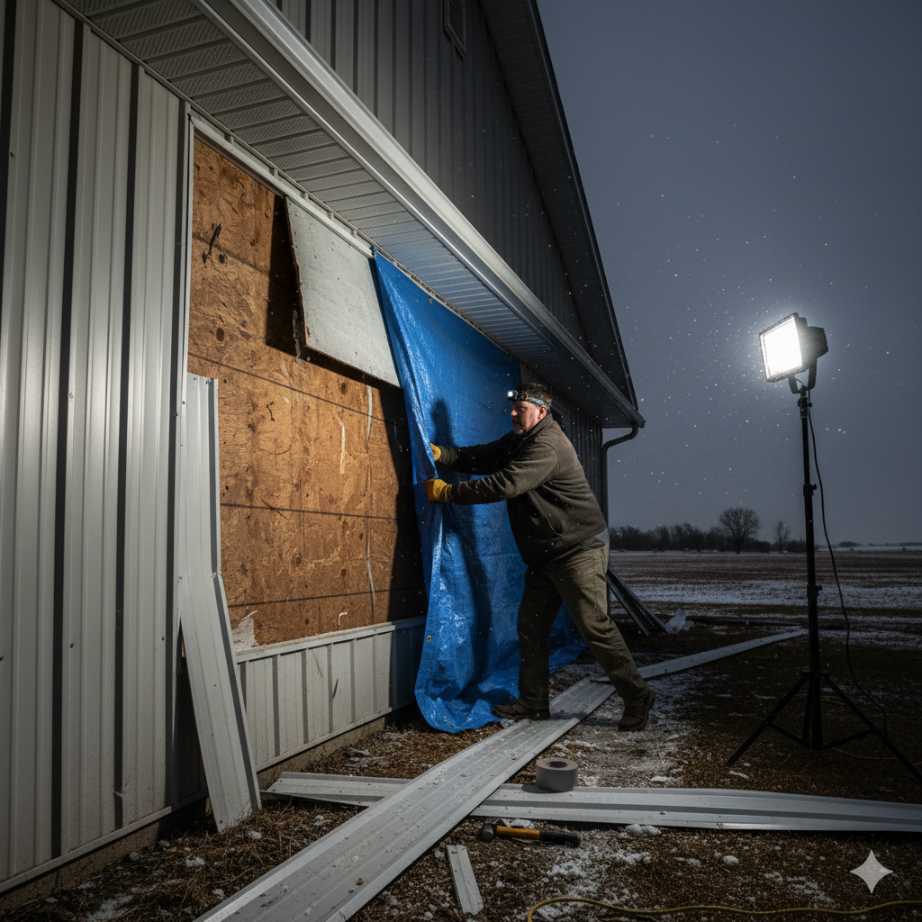
If wind or hail knocks off siding panels, immediate action is essential to prevent severe water infiltration. The primary emergency siding repair steps involve safely assessing the damage, covering the exposed areas with a heavy-duty tarp or plywood, and contacting a professional contractor like Vander Wal Contracting immediately. This quick response minimizes interior water damage to the sheathing and insulation, mitigating the risk of mold growth and structural decay caused by severe wind damage common in North Dakota.
Quick Summary
Act fast when siding fails to protect your home’s vulnerable interior layers. Safely inspect the severity of the damage from the ground and prioritize securing any exposed structural sheathing immediately. Use temporary materials like plastic sheeting or boards to cover the breach. Promptly call our experts for a professional assessment, which is crucial to preventing further structural and moisture damage.
Table of Contents
The Immediate Threat of Missing Siding 3 Critical Emergency Siding Repair Steps Why Wind Damage Leads to Immediate Exposure Siding Damage and Repair FAQs
The Immediate Threat of Missing Siding
When a portion of your siding is ripped off by severe wind damage or shattered by hail impact, it removes the home’s crucial external barrier. Beneath the siding is the house wrap and the wood sheathing (the wall structure). These inner layers are not designed to withstand direct, prolonged exposure to rain, snow, and ice. Even a small breach can lead to rapid water infiltration, mold growth, and eventual rotting of the wood sheathing and studs, severely compromising the home’s structural integrity. Because North Dakota storms can be sudden and intense, acting quickly is non-negotiable.
Why Wind Damage Leads to Immediate Exposure
High winds cause damage in two ways: first, by lifting and tearing off entire siding panels, especially at seams or corners where wind can catch the edges. Second, by driving rain horizontally into any existing cracks or gaps. Once a piece of siding is detached, the underlying structure is immediately exposed to rain and moisture. This is why immediate, temporary sealing is vital for effective emergency siding repair.
Definition: Structural Sheathing. Structural sheathing is the layer of plywood or oriented strand board (OSB) directly beneath the house wrap and siding. It gives the exterior walls lateral strength and rigidity. When exposed due to missing siding, it quickly absorbs water, leading to rot and structural failure if not protected immediately.
3 Critical Emergency Siding Repair Steps
Homeowners should focus on safety and quick mitigation. Do not attempt to climb ladders or perform complex repairs during or immediately after a severe storm.
- Prioritize Safety and Assessment: First, ensure all family members are safe. Next, inspect the damage from the ground level only. Take clear photos and videos of the missing panels and the exposed sheathing. Document the location and size of the breach for your records.
- Temporary Sealing of the Breach: If you can safely access the damaged area from a lower level, use heavy-duty plastic sheeting, tarps, or sheets of plywood to cover the entire exposed area of the wall sheathing. Secure these temporary covers tightly with screws or battens to resist further wind damage, preventing water infiltration until professional repair can be made.
- Call a Professional Contractor: Immediately contact Vander Wal Contracting. We specialize in exterior damage and can perform a professional assessment. We will stabilize the area with professional emergency tarping, stop water intrusion, and develop a permanent repair plan using durable materials like vinyl, steel, or LP SmartSide siding.
Siding Damage and Repair FAQs
Is missing siding considered an emergency repair?
Yes, absolutely. Missing siding leaves your home’s structural components vulnerable to water damage, mold, and decay. This requires immediate attention to mitigate further loss.
Should I remove damaged siding panels myself?
If the panel is already loose and presents a safety hazard, you can gently remove it. However, leave all complex or high-up removal and permanent repair to professional contractors to ensure safety and code compliance.
How long can my home be exposed before structural damage occurs?
Water damage and mold can begin within 24 to 48 hours of exposure. This is why swift temporary sealing and professional emergency siding repair are crucial in North Dakota’s climate.
Does VWC offer emergency tarping services for siding?
Yes, we provide emergency protection services to stabilize your home immediately after a storm, ensuring that all exposed areas are securely sealed against moisture penetration.
Can hail damage on vinyl siding be repaired or must it be replaced?
If hail causes minor dents, repair may be possible. However, if the hail causes cracking or shattering—which often happens to vinyl in cold weather—the damaged panels must be fully replaced.
Why is documenting the wind damage important?
Thorough documentation (photos, videos) creates a clear record of the damage caused directly by the storm. This is essential for getting the necessary approvals for a comprehensive repair.
Rapid Response for North Dakota Exteriors
When your home sustains severe wind damage, every hour counts. Rely on Vander Wal Contracting to provide the expertise and rapid response needed to secure your home. We know the local climate and use only the most durable materials to restore your home with quality and precision.
Protect your home and its structure today. Contact us for a free assessment and emergency siding repair.
By: Vander Wal Contracting Team Last Updated: November 17, 2025