
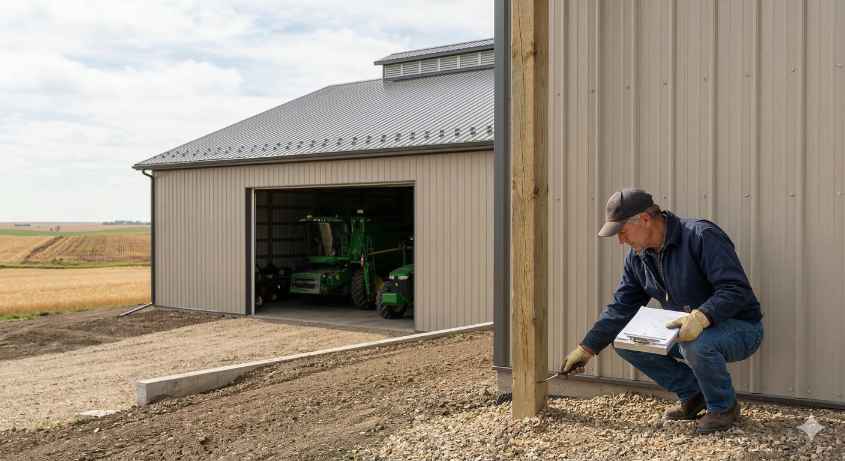
Post-frame agricultural buildings are engineered to be the backbone of North Dakota’s farming operations, providing massive, clear-span storage for machinery and livestock. While these structures are renowned for their “low-maintenance” reputation, the extreme weather cycles of the Bismarck-Mandan area still demand proactive care. Routine maintenance is not just about keeping the building looking sharp; it is about protecting the structural load paths—from the anchored columns to the heavy-duty trusses—that allow the building to withstand 80-mph wind gusts and heavy snow accumulation.
By performing a simple visual inspection twice a year—typically in the spring after the thaw and in the fall before the first freeze—you can identify minor fastener or drainage issues before they escalate into costly structural repairs. A well-maintained post-frame building can easily serve a farm for over 50 years, but that longevity depends on keeping the core components dry, secure, and properly ventilated.
Post-Frame Maintenance Checklist
Maintaining an agricultural shop or barn focuses on three primary areas: moisture management, fastener integrity, and moving parts. Because post-frame construction transfers loads directly to the earth via vertical columns, the health of those posts at the ground level is your highest priority.
Foundation and Perimeter Drainage
Standing water is the primary enemy of any agricultural structure. Check the grading around the perimeter of your building to ensure soil slopes away from the walls.
- Soil Erosion: Look for “drip lines” or erosion at the corners where water may be pooling.
- Post Exposure: If your building uses laminated posts set in the ground, ensure the skirt boards (the treated lumber at the base) are not buried in rising mud or manure, which can accelerate rot even in treated wood.
Fasteners and Metal Cladding
The steel skin of your building acts as a structural diaphragm. Over time, the constant expansion and contraction of metal panels during North Dakota’s temperature swings can “back out” screws.
- Gasket Inspection: Check the rubber EPDM washers on your roofing and siding screws. If they are cracked or missing, water can seep into the wood framing, leading to “hidden rot” in the purlins and girts.
- Panel Tightening: Use a nut driver to snug up any loose fasteners, but avoid over-tightening, which can crush the washer and create a leak.
Roof and Gutter Systems
Agricultural roofs often face heavy snow loads that can damage drainage systems.
- Ice Dam Debris: Clear any branches or debris from roof valleys and gutters. Clogged gutters can cause water to back up under the eaves, damaging the fascia and truss ends.
- Snow Guards: If your building lacks snow guards, consider adding them to prevent “roof avalanches” that can tear gutters off or damage equipment parked near the building.
Comparison: Maintenance Needs by Component
| Component | Frequency | What to Look For |
| Columns/Posts | Annual | Softening, shifting, or rot at the ground line. |
| Metal Siding | Seasonal | Dents from machinery, loose screws, or scratches. |
| Overhead Doors | Bi-Annual | Misalignment, noisy rollers, and weather-strip wear. |
| Ventilation | Seasonal | Blocked ridge vents or birds nesting in the soffits. |
| Fasteners | 5-10 Years | Brittle rubber washers or “backed out” screw heads. |
Ventilation
One of the most overlooked maintenance tasks in agricultural buildings is ensuring proper airflow. In buildings housing livestock or damp machinery, humidity can build up inside the steel panels.
Without adequate ventilation through ridge and soffit vents, this moisture turns into condensation that “rains” inside the building. This dampness can rust interior fasteners and degrade your insulation’s R-value. Periodically check that your vents are free of dust, bird nests, or cobwebs to maintain the “weather-tight envelope” your building was designed for.
Servicing Large Openings and Sliding Doors
The large doors required for combines and tractors are under constant stress. For contractor shops and agricultural buildings, a door that is hard to open often indicates a shifting foundation or worn-out hardware.
- Track Cleaning: For sliding doors, clear the bottom tracks of dirt, ice, and stones that can cause the door to jump the rail.
- Lubrication: Use a silicone-based lubricant on overhead door springs and rollers. Avoid heavy grease, which can attract grit and accelerate wear in dusty farm environments.
Frequently Asked Questions
How long do the posts in a post-frame building last?
Modern pressure-treated laminated posts are rated for 50+ years. However, their lifespan is greatly extended if you keep the base of the building well-drained and avoid soil-to-post contact where possible.
Do I need to paint my metal building?
Most modern steel siding comes with high-end PVDF (Kynar 500) coatings warrantied against fading for 30–40 years. Unless the finish is physically scratched down to the bare metal, you likely won’t need to paint for decades.
Can I power wash the exterior?
Yes, but use caution. Keep the nozzle a safe distance from the panels to avoid denting the metal or forcing water behind the trim and into the insulation.
What should I do if I find a dent in the metal siding?
While a dent is usually cosmetic, a puncture is an urgent repair. You can often replace a single metal panel without disturbing the rest of the wall, which is a major advantage of post-frame design.
How do I prevent birds from nesting in the rafters?
Ensure your soffit vents are properly screened and that there are no gaps where the wall panels meet the roofline. Steel “closure strips” are essential for blocking entry points.
Why are my screws backing out?
This is caused by “thermal movement.” Metal panels expand and contract significantly in the sun. If this is a recurring problem, it may be time to replace the older screws with a slightly larger “oversized” roofing screw to get a better grip in the wood.
Building with accuracy and intent means protecting your investment for the next generation. At Vander Wal Contracting, we understand that a farm building is a tool that must perform every day. If you’ve noticed shifting doors, loose panels, or drainage issues around your shop, contact us for a professional post-frame evaluation. We help North Dakota farmers keep their structures as strong as the day they were built.
By: Vander Wal Contracting Editorial Team
Last Updated: March 9, 2026
Credentials: Bismarck-Mandan’s local experts in agricultural engineering and durable post-frame construction.