
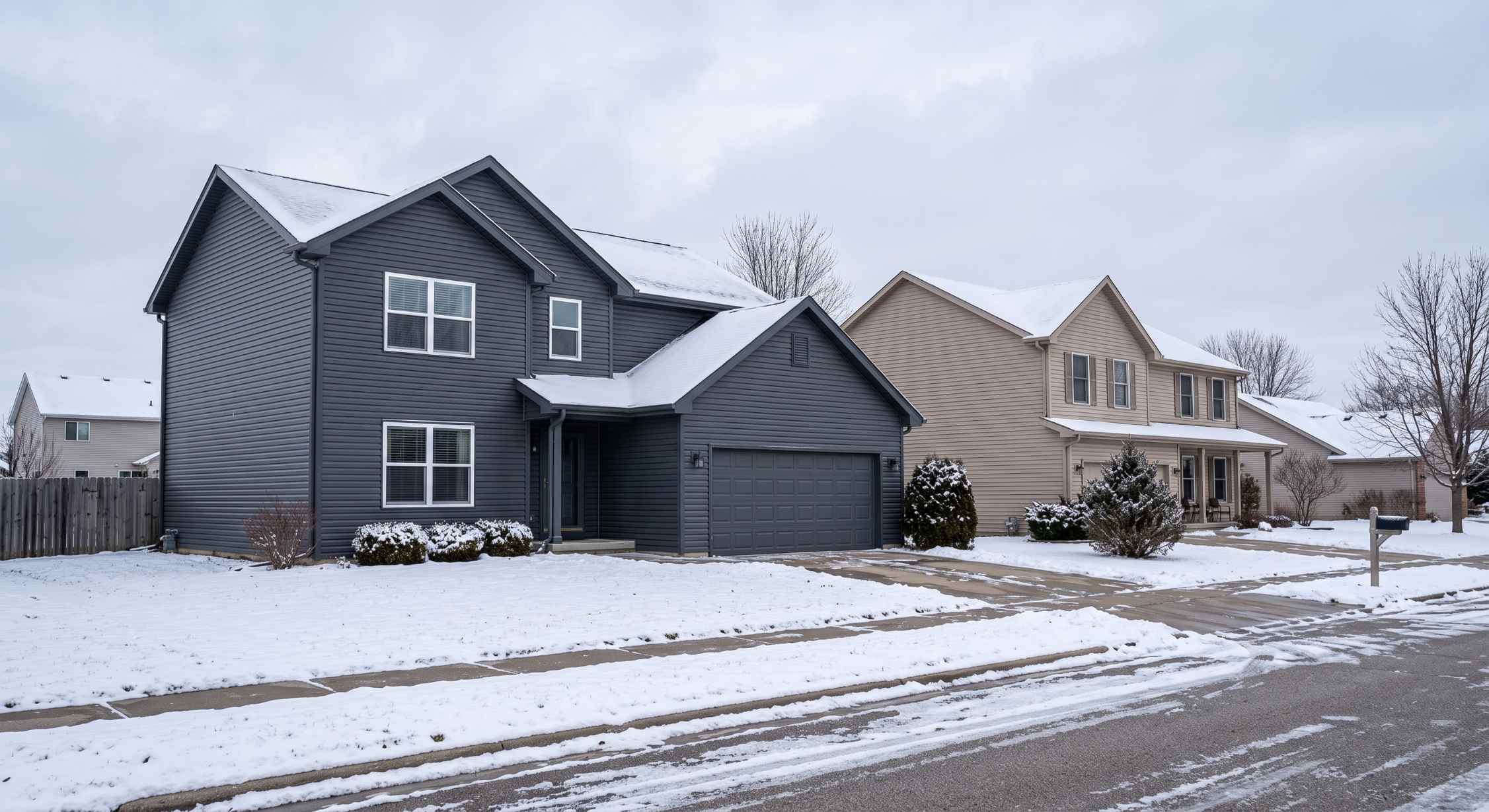
Selecting the right siding for a home in Bismarck or Mandan is not merely an aesthetic preference; it is a critical decision regarding your property’s structural envelope. The extreme Midwest weather cycle—characterized by sub-zero winter temperatures, severe spring hail, and high wind gusts across open terrain—tests the physical limits of exterior cladding. While vinyl siding has long been chosen for its lower initial cost, homeowners are increasingly finding that its material limitations lead to frequent repairs and early failure under regional climate stress.
Investing in a professional steel siding installation in Bismarck, ND provides a permanent, high-performance solution engineered to handle North Dakota’s atmospheric challenges. By evaluating how steel and vinyl respond to thermal shock, wind uplift, and heavy hail impact, it becomes clear why steel siding delivers superior long-term value and return on investment (ROI).
Thermal Cycling: The Freeze-Thaw Vulnerability
North Dakota experiences some of the most dramatic temperature swings in North America, ranging from -30F winter wind chills to over 90F summer heat. This rapid expansion and contraction places immense physical stress on exterior wall systems.
Vinyl Siding under Thermal Stress
Polyvinyl chloride (PVC) plastic expands and contracts significantly with temperature shifts. In sub-zero winter conditions, vinyl loses its flexibility, becoming extremely brittle and glass-like. When hit by wind-blown debris, ice, or large hailstones in freezing weather, brittle vinyl shatters or cracks rather than absorbing the impact. Furthermore, if vinyl panels are nailed too tightly during installation without room to “float,” thermal contraction during a deep freeze causes the panels to buckle, warp, or pull away from the nailing hem.
Steel Siding under Thermal Stress
Heavy-gauge steel maintains its structural flexibility and dimensional stability regardless of the temperature. Steel does not become brittle in extreme cold, nor does it soften or sag under intense summer heat. When paired with high-performance PVDF (Kynar 500) paint systems, steel panels resist the chalking, blistering, and fading caused by relentless UV exposure, ensuring your home’s exterior remains flat, rigid, and secure year-round.
Hail and Wind: Evaluating Storm Defense
In the Bismarck-Mandan area, spring and summer storms routinely bring high winds and wind-driven hail. Your siding serves as the primary barrier preventing bulk water intrusion into your wall cavities.
| Performance Characteristic | Standard Vinyl Siding | Premium Steel Siding |
| Impact Resistance (Hail) | Low in winter; Moderate in summer (Prone to cracking/holes) | Superior / Class 4 Rated (Resists puncturing & cracking) |
| Wind Resistance | Prone to “unzipping” or blowing off in 60+ mph gusts | Mechanically fastened; rated for extreme prairie wind loads |
| Cold Weather Behavior | Becomes brittle and glass-like | Retains full structural strength and flexibility |
| Fire Resistance | Melts and distorts when exposed to high heat/flame | Non-combustible (Class A Fire Rating) |
| Average Lifespan in ND | 15–20 Years (Requires ongoing maintenance) | 50+ Years (Lifetime defense) |
Hail Impact
When a major hailstorm strikes, vinyl siding frequently suffers catastrophic failure, resulting in punctures, large cracks, and missing sections. Conversely, heavy-gauge steel siding absorbs high-energy impacts without cracking. While an extraordinary hailstone might create a minor cosmetic depression in lighter metal gauges, heavy 26- to 24-gauge steel resists denting and prevents water from penetrating the underlying sheathing.
High-Wind Uplift
High winds traveling across a roofline or wall create negative pressure zones that pull outward on exterior cladding. Vinyl panels rely on a plastic interlocking lip that can “unzip” when subjected to severe wind gusts, exposing the house wrap and wood substrate. Steel siding utilizes heavy-duty fastening systems and rigid panel locks that remain anchored to the wall framing, keeping your weather-tight envelope intact during severe storms.
Long-Term Cost & ROI: Initial Spend vs. Lifetime Value
While vinyl siding carries a lower upfront material and installation cost, evaluating its true cost requires factoring in the “replacement cycle,” ongoing maintenance, and potential insurance deductibles following storm damage.
Eliminating the Replacement Cycle: Vinyl siding in North Dakota typically requires partial repairs or full replacement every 15 to 20 years due to storm damage or UV degradation. Steel siding is a “one-and-done” investment designed to last 50 years or more, effectively freezing your exterior cladding costs.
Substrate Protection: When vinyl cracks during a storm, water easily bypasses the barrier and soaks the house wrap and wood sheathing. Left undetected, this leads to silent wood rot and mold. Steel’s structural integrity prevents these breaches, protecting your home’s framing from costly hidden repairs.
Enhanced Energy Efficiency: Installing steel siding provides an ideal opportunity to add a layer of continuous rigid foam insulation beneath the panels. This wraps your home in a continuous thermal blanket, eliminating thermal bridging through wall studs and lowering your seasonal heating and cooling bills.
Frequently Asked Questions
Is steel siding prone to rusting in North Dakota snow?
No. Modern steel siding is manufactured with advanced metallic coatings—typically hot-dipped galvanized zinc or Galvalume (aluminum-zinc alloy)—that prevent rust. Combined with multi-layer factory-applied paint finishes, the steel core is completely sealed against moisture and melting snow.
How does steel siding compare to LP SmartSide engineered wood?
Both are premium, climate-resilient options for North Dakota homes. Steel offers maximum impact resistance and zero exterior painting requirements, while LP SmartSide provides a rich, thick, deep-grained cedar aesthetic. Both outperform standard vinyl in cold weather durability.
Does steel siding make a home noisier during rain or hail storms?
No. When installed over standard wood sheathing, synthetic house wrap, and rigid foam insulation, steel siding does not create extra noise. The solid wall assembly absorbs acoustic vibration, making it as quiet as any traditional siding material.
Can steel siding be installed during the winter in Bismarck?
Yes. Unlike vinyl, which can crack when cut or nailed in freezing temperatures, steel siding can be safely installed year-round. Its dimensional stability allows professional installers to maintain exact tolerances regardless of the outdoor temperature.
Will steel siding increase my home’s resale value in Bismarck, Mandan, or Lincoln?
Yes. Local home buyers recognize the immense value of a permanent, storm-resistant exterior. Homes clad in premium steel or heavy-duty metal systems often command higher resale prices and sell faster because buyers know they won’t need to replace the siding after the next storm.
Building with accuracy and intent means selecting exterior materials engineered specifically for the demands of the North Dakota landscape. At Vander Wal Contracting, we specialize in premium steel siding installations, structural post-frame buildings, and climate-resilient roofing across Bismarck, Mandan, and Lincoln. Contact us today to schedule a comprehensive exterior consultation and build your home’s defense for a lifetime.
By: Vander Wal Contracting Editorial Team
Last Updated: August 14, 2026
Credentials: Bismarck-Mandan’s local specialists in steel siding installation, climate-resilient exterior engineering, and high-performance building envelope design.